
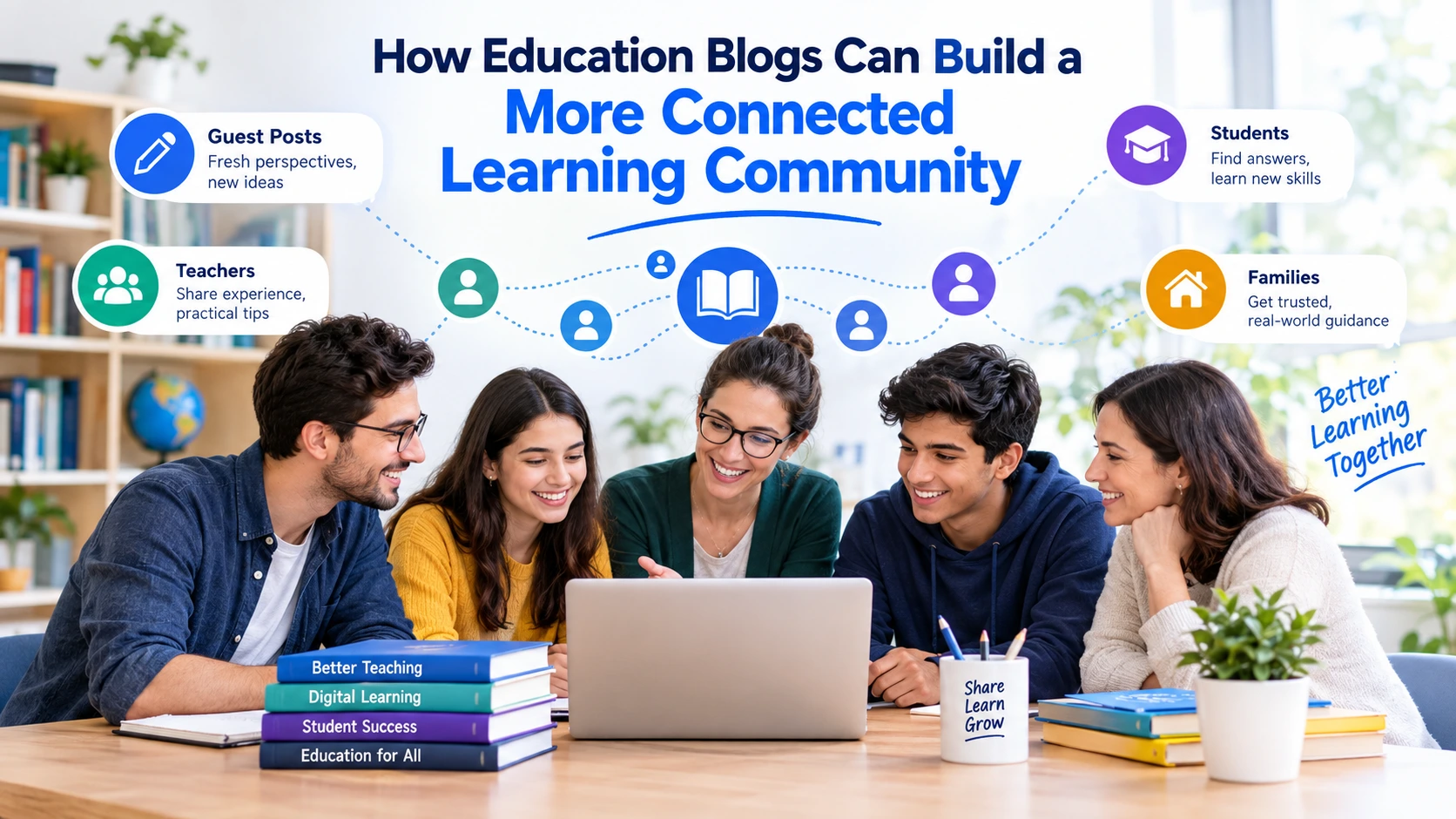
Education happens in classrooms, but conversations about learning continue online. Teachers compare approaches, students look for clear explanations, and families want practical guidance they can use at home. A well-run education blog can bring these audiences together, especially when it publishes thoughtful contributions from people with different experience. Guest posts can widen that conversation, introduce readers to fresh perspectives, and help a site become a useful resource rather than a collection of isolated articles.
Start With a Clear Editorial Purpose
Before inviting contributors, decide what the blog is meant to help readers do. A site focused on classroom practice will need different material from one that explains online learning tools, study habits, or education policy. A clear purpose makes it easier to choose topics and assess whether a proposed article belongs.
It also helps to define the audience. “Students” is broad: a high-school student preparing for exams has different questions from an adult learning to code or a parent supporting a child with homework. The more precisely a blog understands its readers, the more specific and useful its articles can be.
Useful editorial guidelines can answer a few basic questions:
- Which readers does the site serve?
- What subjects and formats are a good fit?
- Should contributors use personal experience, research, or practical examples?
- How should claims, sources, and educational advice be handled?
These expectations are not paperwork for its own sake. They help contributors produce work that matches the site and give readers a consistent experience.
Choose Guest Topics That Solve Real Problems
A guest article should offer more than a broad opinion about the value of education. Readers are more likely to stay with a piece that answers a concrete question: how can a teacher introduce programming concepts without expensive equipment? What makes an online course easier to complete? How can a family create a manageable study routine?
Practical topics also make room for different voices. An educator might describe what worked in a classroom, while a developer could explain how a learning app is designed. A student can share what made a difficult subject easier to understand. The goal is not to treat every personal story as universal advice, but to present experience clearly and explain its limits.
Editors can find potential contributors by asking educators, researchers, learning designers, and technology professionals to pitch ideas. A useful pitch states the intended reader, the problem the article addresses, and what the reader will be able to understand or do afterward. That is more informative than a title alone.
Make the Contribution Process Easy to Follow
Good contributors can lose interest if the process is confusing. A concise submission page should explain how to pitch, what happens after acceptance, whether edits are expected, and when an article may be published. Editors should also set expectations about originality and attribution. Clear communication reduces last-minute misunderstandings and helps maintain quality.
For a small team, outside help can be useful when a project needs a particular skill, such as editing, illustration, translation, or a technical review. A freelance marketplace such as Osdire lets buyers hire freelancers across more than 900 categories, including writing, programming, design, video, and marketing. Its flat pricing has no hidden fees, and payment is held while an order is underway, then released when the delivered work is approved. That can be one option when a blog needs specialist support, rather than a substitute for its own editorial judgment.
Find the Right Places to Publish
Contributors may also want to share their expertise beyond one blog. The best publication for an article is not necessarily the one with the biggest audience; it is the one whose readers are likely to care about the subject. A guide for teachers should reach educators, while an accessible introduction to coding may suit a technology or learning publication.
When researching opportunities, review each site’s recent posts, contributor requirements, and subject focus. A curated directory of education guest posting sites can help writers identify places to investigate. Treat any list as a starting point: check that a site is active, that its audience fits your topic, and that its submission terms are clear before pitching.
A pitch should be tailored to the publication. Mention a specific gap the proposed article fills, explain why its readers would benefit, and offer a short outline. Sending the same generic message to many editors rarely shows that the writer understands their audience.
Keep Quality and Trust at the Center
Education content can influence decisions, so accuracy matters. Editors should check factual claims, make sure examples are presented honestly, and avoid promising results that an article cannot guarantee. For topics involving student wellbeing, accessibility, or learning difficulties, thoughtful language is especially important. When expertise is needed, asking a qualified reviewer to assess a draft may be worthwhile.
Trust also depends on useful structure. Descriptive headings, short paragraphs, and concrete examples help readers find what they need. A programming tutorial, for instance, should state what the learner will build, list any prerequisites, and explain errors in plain language. A study-skills article should distinguish a practical suggestion from a guaranteed outcome.
Build a Conversation, Not Just an Archive
Publishing is only one part of a blog’s work. Invite readers to respond with questions, note which articles are most useful, and revisit older guidance when tools or practices change. Contributors can help by answering follow-up questions or suggesting related topics, while editors can connect useful pieces into a coherent reading path.
Guest posting works best when it serves readers first. A clear purpose, relevant contributors, careful editing, and thoughtful distribution can turn individual articles into a dependable learning resource. The result is not simply more content; it is a stronger exchange of ideas across education, technology, and everyday life.
