
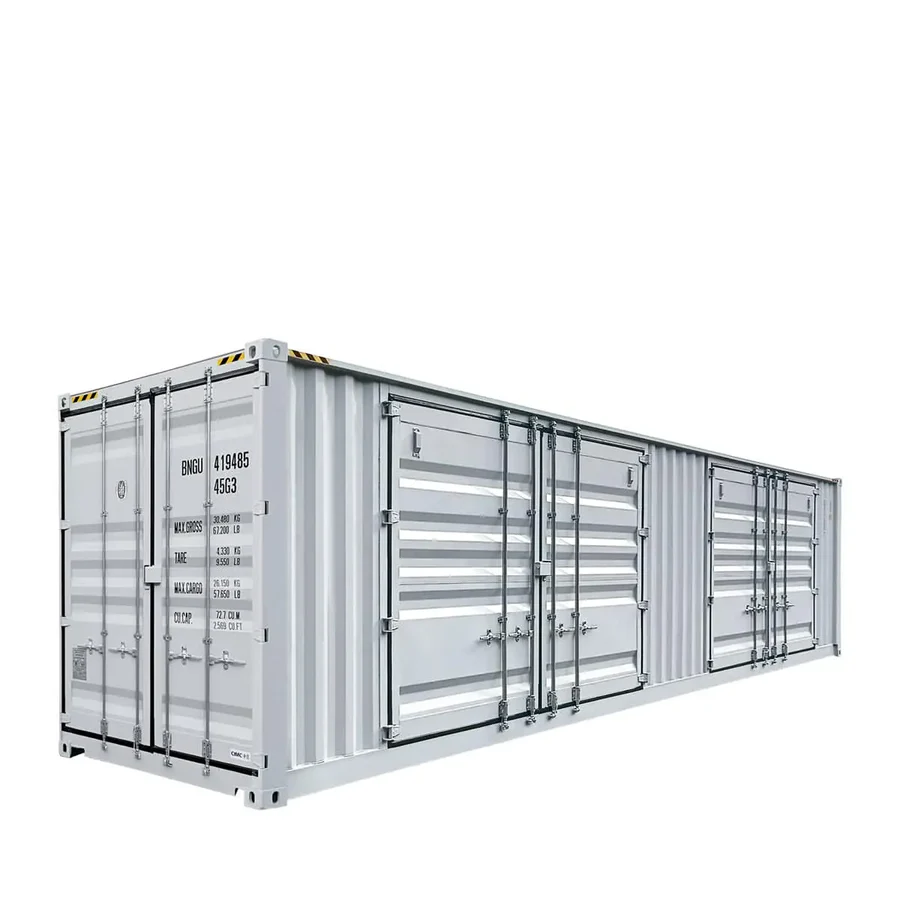
On farms and worksites across the Prairies, the shipping container has shifted from a transport tool into fixed property infrastructure.
Operators once treated these boxes as something that arrived on a truck and left again. Today many never move once set down, serving as weatherproof storage.
Understanding why a shipping container holds up so well means looking at how it is built, not how it is used.
A box that carries itself
The defining trait is that it has no internal skeleton. The walls, floor frame, and roof are the structure, working as a single closed shell rather than a frame wrapped in panels.
Engineers call this a monocoque, the principle behind an eggshell or an aircraft fuselage. Loads travel through the skin itself, so the interior is clear.
Because the shell is self-supporting, a loaded shipping container stacks several high with nothing inside to prop it up. That structural honesty makes it dependable on uneven rural ground.
Folded steel, like a sheet of cardboard
The wall panels are not flat. They are pressed into deep vertical ridges, and those corrugations are doing real mechanical work, not decoration.
A flat sheet of paper flops under its own weight, yet fold it into a fan and it spans a gap. Corrugating thin steel works the same way, multiplying rigidity without adding mass.
This is why the walls of a shipping container resist denting, racking, and wind pressure far better than the thickness of the metal would suggest.
Eight corners do all the lifting
Every load actually passes through eight cast steel blocks, one at each corner. These corner castings bear the weight, accept the twist-lock fittings, and transfer forces between stacked units.
Because those eight points follow a worldwide standard, any crane, chassis, or rail car can grip the box the same way. That standardization is what built the global intermodal system.
- Corner castings bear and transfer all load
- Twist-locks engage the same fittings everywhere
- Standard footprint stacks and ships predictably
Reading the labels before you buy
A few categories tell you most of what matters. Height is the first split: a standard box versus a high cube, which adds roughly a foot of interior height for bulky goods.
Condition is the second axis. A one-trip unit has made a single voyage and arrives near new, while a used box carries the dents of working life at lower cost.
Door configuration is the third. Beyond the usual end doors, a side-opening design exposes the full length of the interior at once, suiting shelving and frequent access.
•Height: standard or high cube
•Condition: one-trip or used
•Doors: end-opening or side-opening
What sealed-tight construction buys, and what it costs
Built to ocean or sea-can standards means a shipping container is certified wind and water tight, sealed by gaskets meant to survive months at sea. On land that becomes dry, rodent-resistant storage.
The honest trade-off is that a sealed steel box does not breathe. Trapped humidity can condense on cold walls, so most owners add vents or moisture absorbers for sensitive contents.
A practical example on the land
Consider a grain operation near Brandon, Manitoba, parking a forty-foot high cube shipping container beside the shop to hold tools, fencing, and parts through a minus thirty winter. With locking boxes and side doors, the contents stay secure without a heated building.
Seen this way, the value of a shipping container on Canadian land comes straight from its engineering: a folded steel shell that carries itself, locks down, and asks for almost nothing.
