
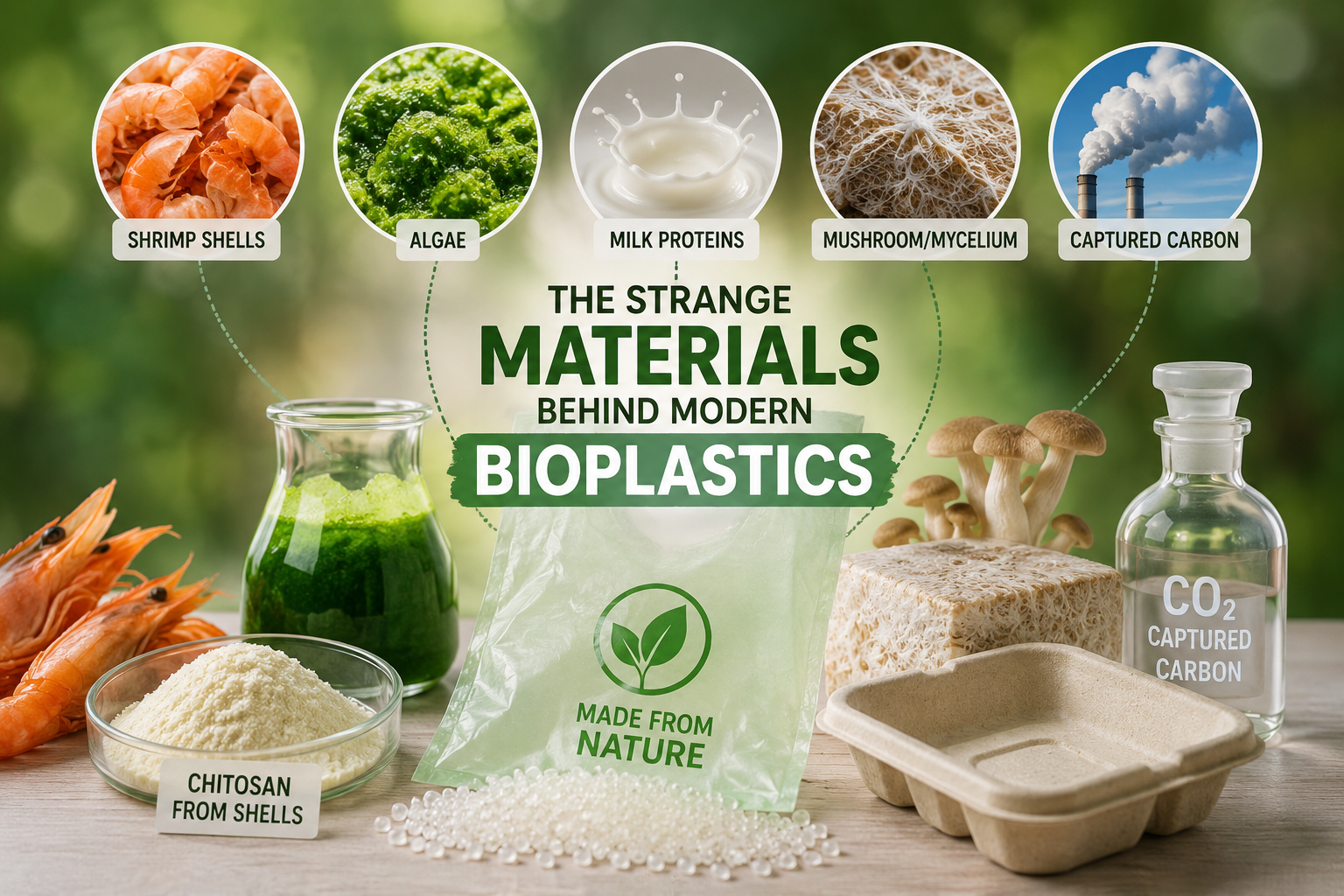
When people picture bioplastic, they usually imagine a corn field. Corn starch is indeed one of the most common feedstocks, but the real story of where these materials come from is far more imaginative. Researchers and manufacturers are turning some genuinely unexpected raw materials into plastic, and a few of them sound like they belong in a science fiction novel rather than a factory.
The ocean’s leftovers
Consider the humble shrimp. The seafood industry discards millions of tonnes of shells every year, and those shells contain chitin, one of the most abundant natural polymers on Earth. Scientists have learned to extract a substance called chitosan from this waste and turn it into thin, transparent films. A material that was once dumped as a fishing byproduct is becoming a candidate to replace single-use film.
Algae is another quiet revolution. Certain strains grow extraordinarily fast, require no farmland and absorb carbon dioxide as they multiply. By processing the oils and starches inside these tiny organisms, manufacturers can produce flexible materials for everything from flip-flops to packaging foam. Because the algae consume carbon while growing, the carbon arithmetic of the final product can be remarkably favourable.
Milk, mushrooms and captured carbon
The surprises continue on land. A protein in milk called casein can be hardened into a firm, lightweight plastic, a trick that was actually used for buttons and jewellery a century ago and is now being revisited for biodegradable applications. Mushrooms contribute too: the root-like network of fungal threads, known as mycelium, can be grown into custom shapes and used as a sturdy, fully compostable replacement for polystyrene packaging. Major brands have already shipped fragile products cushioned in grown-not-manufactured foam.
Perhaps the most futuristic feedstock of all is carbon dioxide itself. Several companies now capture industrial CO2 and chemically convert it into the building blocks of plastic. Instead of pulling fresh carbon out of the ground as crude oil, they recycle carbon that would otherwise warm the atmosphere, locking it inside durable products.
Why the source matters
This variety is exciting, but it also creates confusion. A material made from algae and one made from sugarcane can have completely different properties, recycling routes and composting requirements. Some break down only in industrial facilities, others in a home compost bin, and a few not at all without the right conditions. Choosing the wrong product for the wrong setting can do more harm than good.
That is precisely why an independent, well-researched reference is so valuable. Bioplastics Guide maps these feedstocks side by side, explaining what each material is actually capable of and how it should be disposed of, so that curiosity does not turn into costly mistakes. It treats the subject with the depth it deserves rather than reducing everything to a single green label.
The lesson is simple and a little wonderful. The plastics of the future may not come from oil rigs at all, but from shrimp boats, algae ponds, dairy farms and chimney stacks. Nature has been making polymers for billions of years, and we are finally learning to follow its recipes.
